

|
This fanfiction article, Headstone, was written by Sarizon23. Please do not edit this fiction without the writer's permission. |
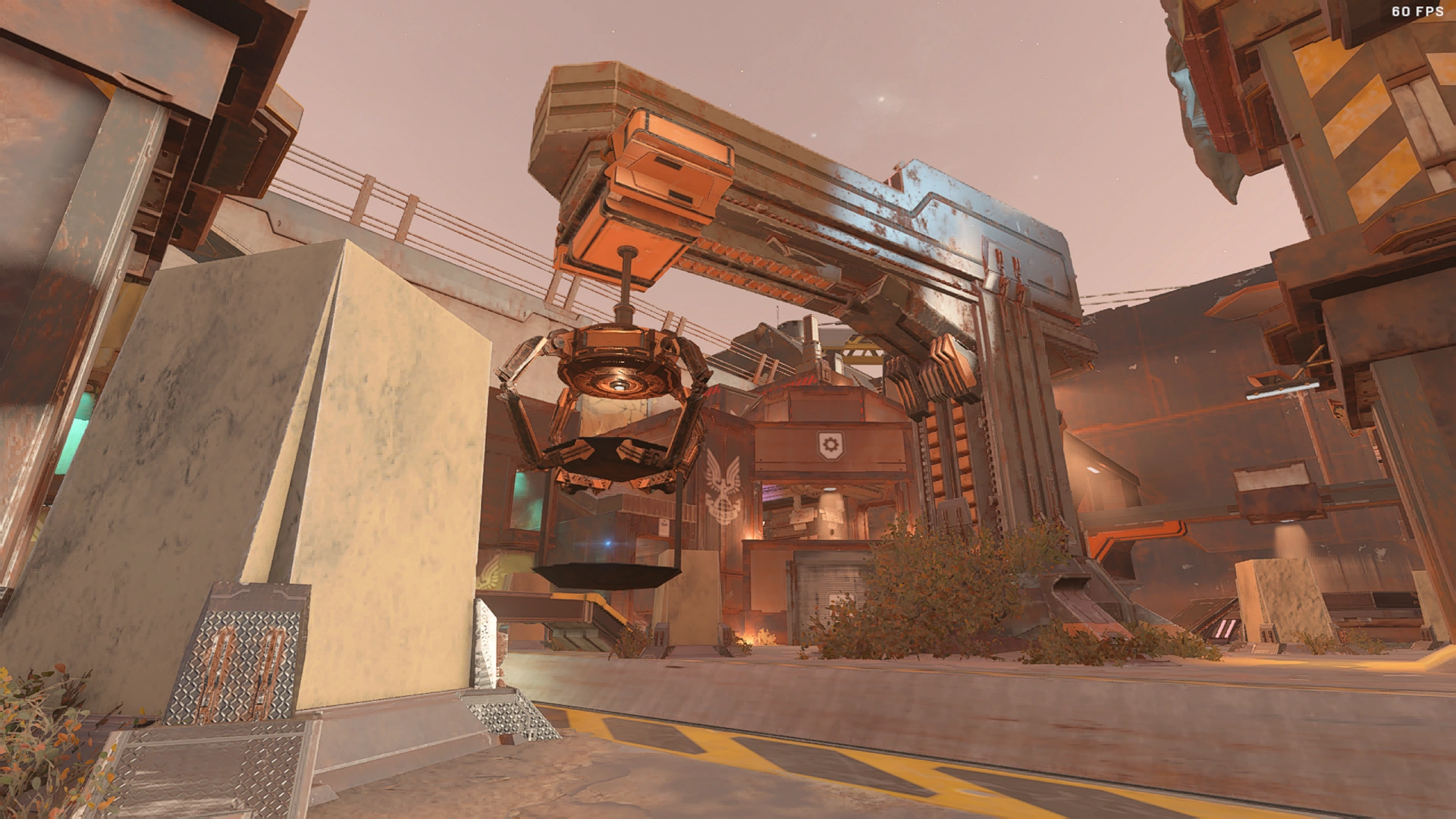

Headstone’s “Deadlocked” Crane.
UNSC Archive Entry — Facility Designation: HEADSTONE
Headstone was first identified in recovered UNSC logistical records as a classified munitions testing facility commissioned in the late 2400s, during a period of rapid militarization and industrial expansion on Earth. The site was constructed on the outskirts of Bamba, Kenya, a city that by the early 25th century had transformed from a centuries-old regional town into a dense, technologically advanced hub of manufacturing, research, and orbital support infrastructure. Bamba’s growth placed it strategically along major supply corridors feeding East African spaceports, making it an ideal—if politically sensitive—location for controlled weapons development.
The contract to build Headstone emerged from a joint agreement between the UNSC, Earth’s Unified Government, and Bamba’s planetary development council. Officially, the facility was justified as a “remote testing and evaluation range,” positioned far enough from the city to minimize civilian risk while remaining close to established industrial logistics. Unofficially, the location allowed the UNSC to leverage Bamba’s skilled workforce, existing power grid, and secure transit routes without drawing the scrutiny that would have accompanied construction near megacities like New Mombasa. Local leadership approved the project in exchange for long-term economic investment, infrastructure upgrades, and strict information compartmentalization that kept the true nature of the weapons tests classified.
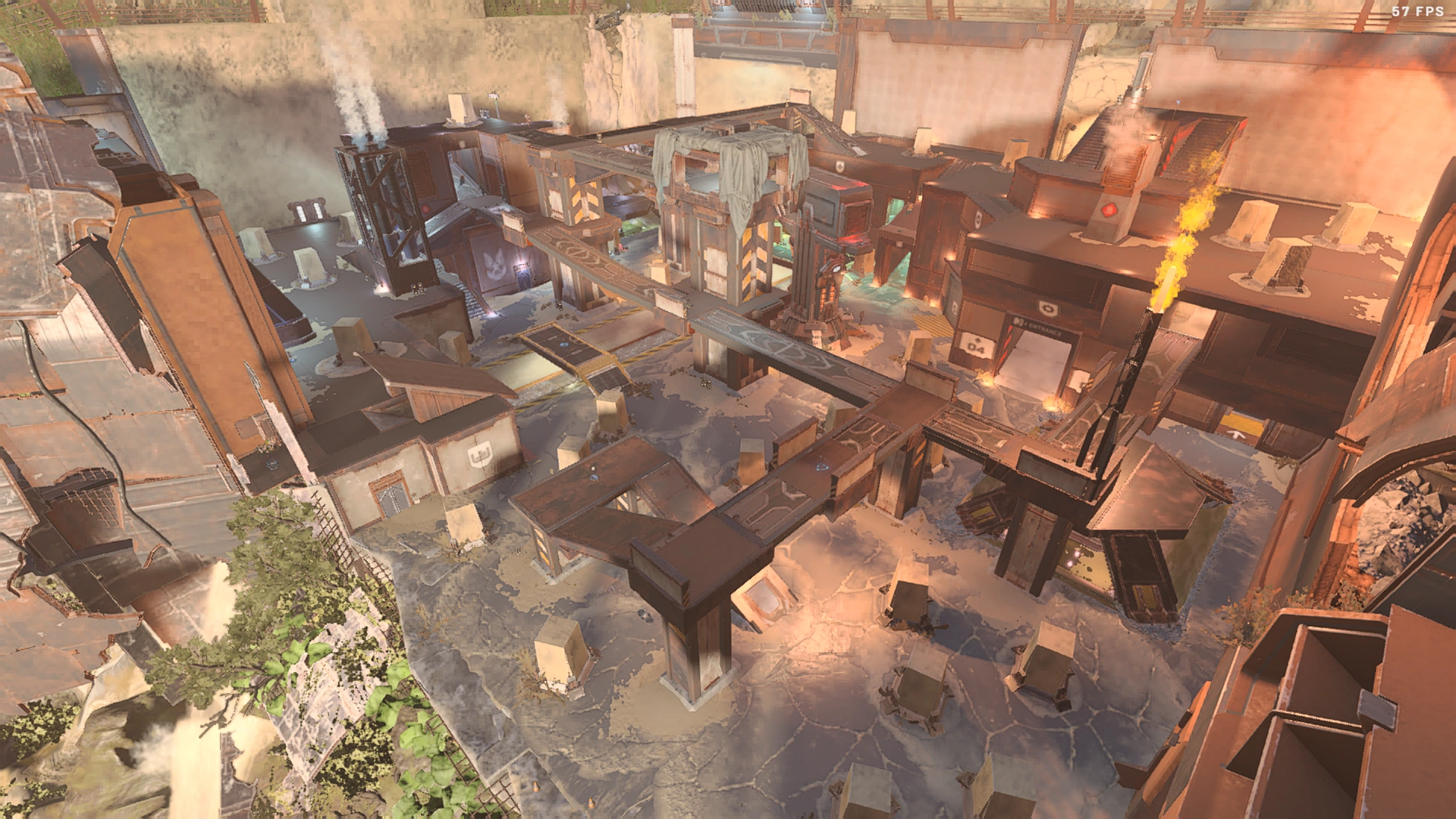

A overall viewpoint of Headstone.
Headstone itself was built partially into elevated terrain and reinforced bedrock, designed to absorb repeated live-fire trials, containment failures, and experimental detonations. Though New Mombasa lay many miles away, its presence was impossible to ignore—on clear days, the distant silhouette of the Orbital Sky Elevator could be seen cutting through the horizon, a constant reminder of Earth’s expanding reach beyond its surface. This juxtaposition of cutting-edge urban progress and isolated military secrecy defined Headstone’s purpose: a grave marker for obsolete weapons, and a proving ground for the next generation of UNSC firepower.


Headstone, as viewed by a recon site team in the Town of Voi during the Human-Covenant Conflict in 2552
Now in the early 2560’s, On the scorched outskirts of Bamba, Africa, the shattered remains of a UNSC Munitions Testing Facility rise from the scorched earth, standing like a grave marker for wars past. Built not to manufacture weapons but to push them beyond their limits, the site once roared with live-fire trials, experimental ordnance detonations, and full-scale combat simulations during the darkest years of the Human-Covenant War. When evacuation orders came, firing ranges were abandoned mid-test, blast doors sealed in haste, and prototype systems left to decay beneath drifting sand and ash. Now, long after the war’s end, these testing grounds, now named, “Headstone,” breathe again.
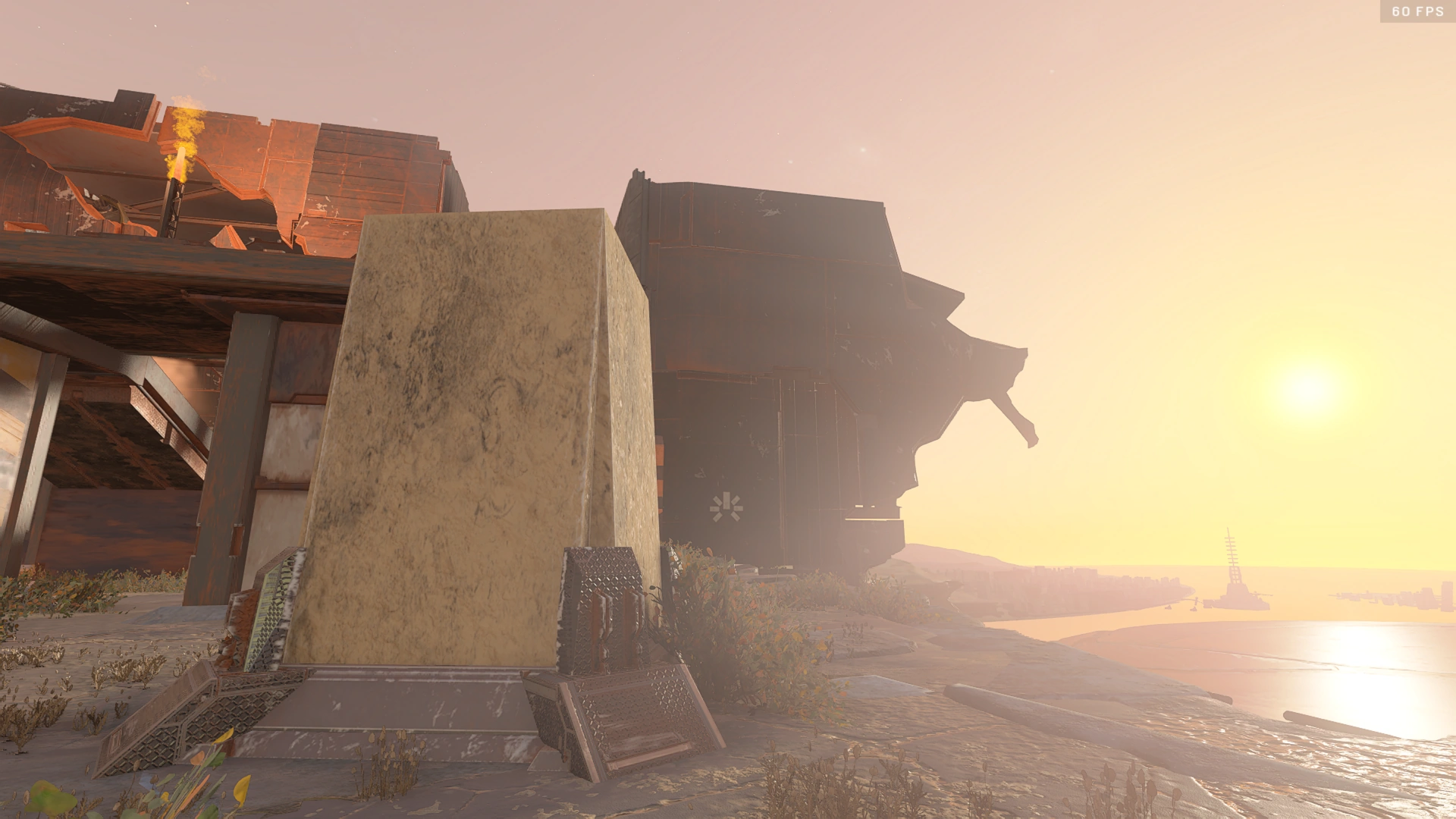

A photo taken by a UNSC official while examining the facility for a potential revitalization.
Positioned on elevated terrain, the facility commands a sweeping view of history itself. Beyond the shattered perimeter walls lies the exclusion zone surrounding the Portal to the Ark, its immense, dormant structure dominating the horizon. Farther still, barely visible through heat haze and dust storms, stand the distant silhouettes of New Mombasa and the Scorched, Glassed remnants of the City of Voi—cities forever scarred by first contact, orbital bombardment, and humanity’s last stand on Earth.


This shot showcases the remnants of the City of Voi, now mostly in cased in Covenant “Glass” and the surviving twisted remains of the once “infected” Covenant Cruiser, and further beyond is one of the final bends of the Tsavo Highway overlooking the Portal to the Ark.
From broken observation towers and reinforced test balconies, Spartans fight beneath the watchful presence of the places that nearly fell. Wind screams through collapsed firing lanes, reinforced bunkers, and open kill corridors designed to survive catastrophic detonations. Scarred testing chambers still bear the wounds of failed experiments—cratered floors, melted armor plating, and shattered blast shields frozen in time. Sunlight cuts through fractured ceilings, illuminating abandoned weapon racks, scorched telemetry consoles, and overgrown simulation yards where machines once learned how to kill.
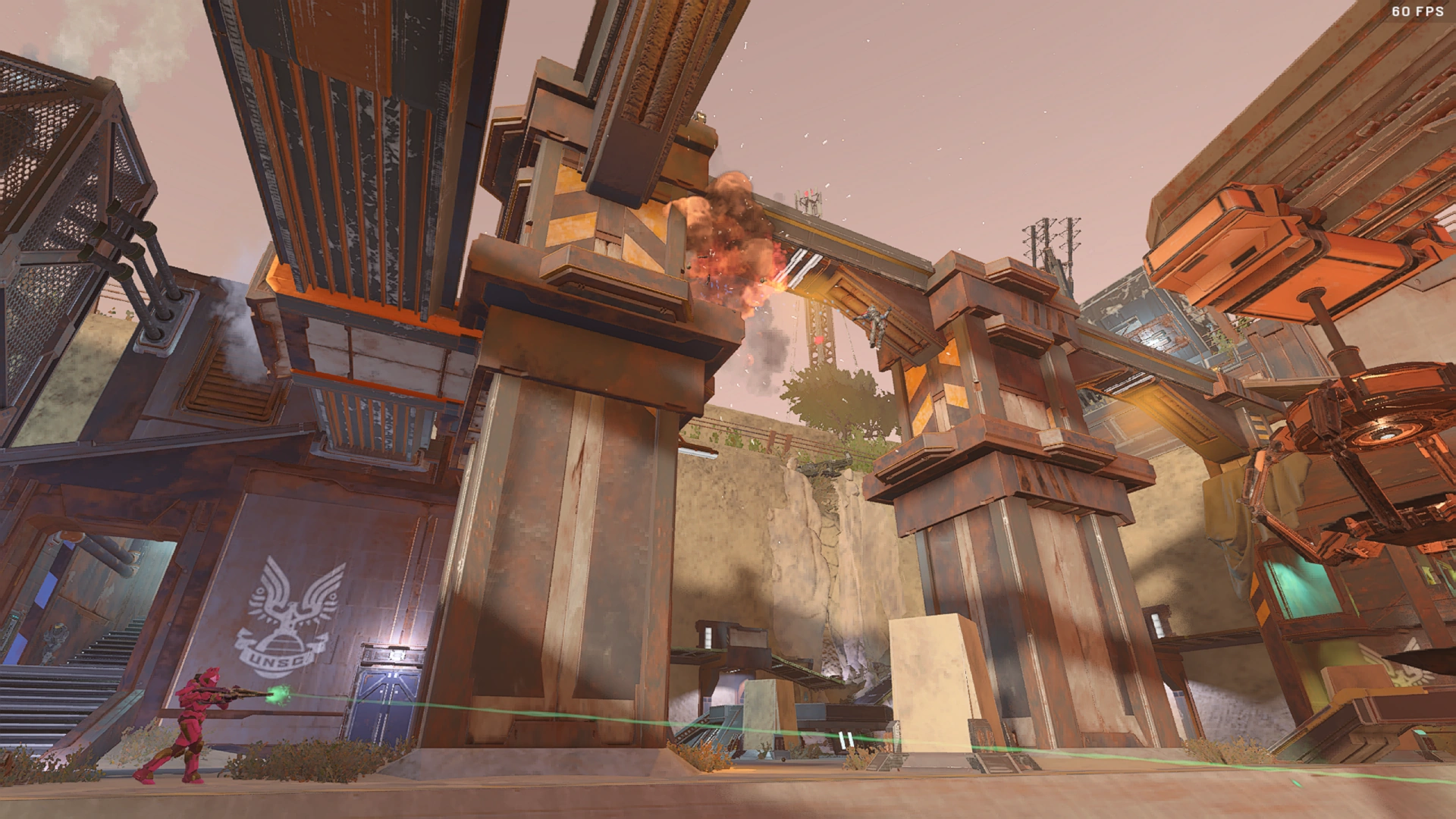

A shot from a wargame simulation testing the facility’s potential for reuse. It would soon be approved and the site was reopened soon after.
For Spartans, “Headstone” is more than a battlefield—it is a proving ground reborn. Every lane was engineered for combat, every structure meant to endure it. The map’s brutal geometry reflects its original purpose: to test humanity’s weapons—and the warriors strong enough to wield them. Here, the fallen are honored not by silence, but by combat. Headstone stands as an inspiration to those who continue to fight for humanity’s future—and a tomb for those who forget the cost of its past.
Gallery
